Putting Everything on the Table, In Faith – Acts 15

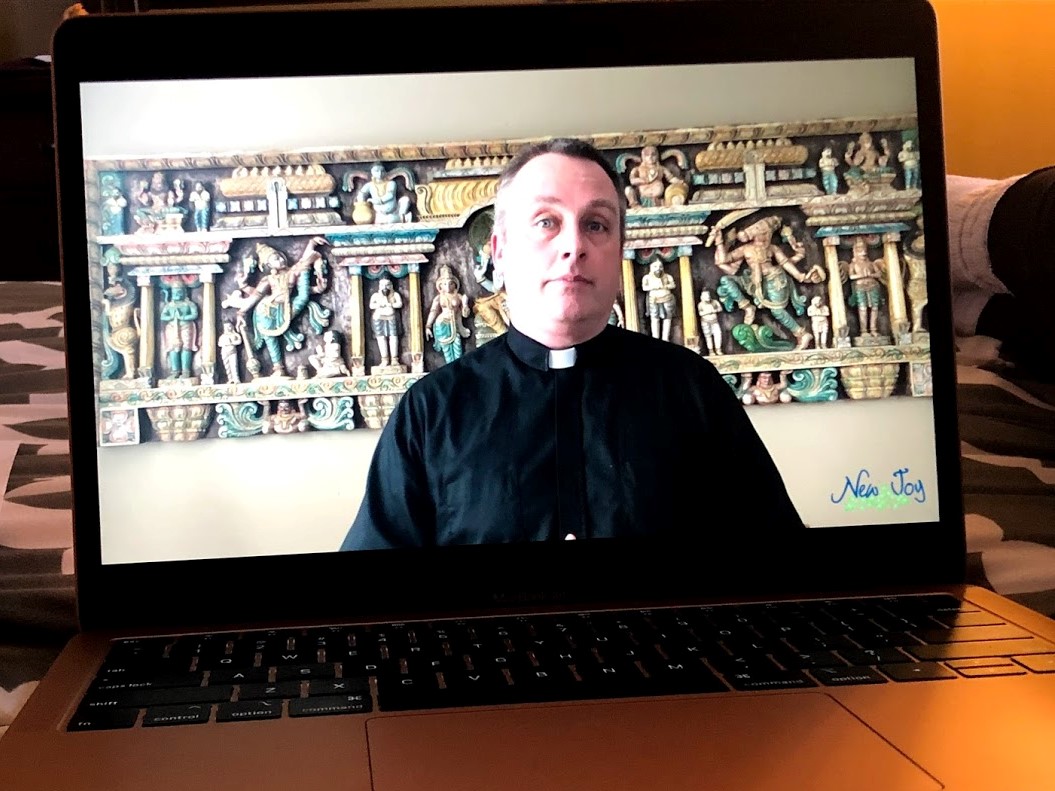
I haven’t been posting sermons here recently … but this one on Acts 15, and the bold faith of those first believers to trust in and be moved by the Spirit to do a new thing, is one I wanted to share. I believe that the church today is in an Acts 15 moment.

Preached on Sunday, April 28


Grace to you and peace, from the One who is, who was, and who is to come. Amen.

“If the people lead, the leaders will follow.”

This is sometimes true.
Leaders often take a pulse, barometer of people,
read what the people are already doing, and only then make decisions.

In the Early Church, the leaders of those first Church Councils decided
upon the Books of the Bible in large part simply by seeing and accepting
what the local churches, what the people, were already reading.
In American history, the constitutional amendment repealing prohibition
was less a bold act of leadership than it was an acknowledgement
of what people were already doing.

Sometimes, often, the people lead, and the leaders simply follow.

In today’s reading from Acts 15, the leaders made a profound decision.
Huge decision. Paradigm-shifting decision.
But, they were merely following what the people – and God’s Spirit – were already doing.
What the people were doing, what God’s Spirit was doing, was profound,
huge, paradigm-shifting.
The Council only recognized it and went along with it.

So what, exactly, were some of those first Christians doing?
They were doing a new thing in faith, in stark contrast to the tradition they received,
in stark contrast to the familiar ways of doing things,
and indeed, in stark contrast to God’s Word itself.
Indeed, on the surface, what they were doing was heresy – Spirit-filled, Spirit-led heresy.

You see, Jesus was a faithful Jew, and the first followers of his were Jews, too,
as were the broader group of Jews who followed his work closely,
including the Pharisees.
Devout Jews observed the Law as a sign of the promises God made to them.
Following the Law – including circumcision, dietary laws, Sabbath laws,
and other such laws – was a way to live faithfully as God’s people,
to follow God’s command, to be a sign and a witness to the world of who you are
and whose you are.
These laws were a big deal. BIG deal. HUGE deal.
Even re-interpreted, so much of Jesus’ work has to do with the law,
and how it is to be followed.
Let’s think of groups today and their distinctive practices.
The Amish reject most forms of modern technology.
Devout Muslims stop everything and pray five times a day, and fast during Ramadan.
Vegetarians do not eat meat.
Vegans do not eat anything derived from animals.
These are distinctive practices that define a group.
Take away these distinctive practice, and the group might not exist,
or at least, might not have as strong an identity and be recognizable.

First century Jews had their distinctive practices. To be a Jew meant to follow the law.
Circumcision. Dietary laws. Sabbath. And more. That is what Jews did.
There was no other way to be a Jew, to be part of God’s chosen people.

And yet, the early Christians – who were Jewish –
had this crazy experience of God’s Spirit moving among them.
Jews from all over the world were coming to faith in Christ,
and Peter and the early Christians were proclaiming the Good News faithfully.
Last week we heard about an Ethiopian – a non-Jew, perhaps – who came to faith.
Peter baptized him.
Then, a few chapters later in Acts, Cornelius, a God-believing Gentile, a Roman Centurion,
is brought to faith and is baptized.
Two non-Jews, brought to faith.
Then, just a little later in Acts, a large number of people were brought to faith in Antioch,
and also these were non-Jews.
And these are only the ones we know about. Surely there were more.

God’s Spirit was moving in ways that were unknown, that were unsettling to the faithful,
ways that were considered heretical because God’s Spirit hadn’t done this before,
moving among the Gentiles in such a way.
God’s law clearly seemed to outline a different experience and life of faith.
Indeed, what was happening was contrary
to much of what they had learned and known about God.
Unsettling, disturbing, baffling … indeed!

But of course, the life and ministry, death and resurrection of Jesus
was also contrary to much of what they had learned and known
about faith and life and death and the way God works.
Indeed, a new thing was underfoot,
and it was unsettling and baffling to those committed
to the established ways of doing things, the God-given ways.
Yet, this new thing was an exciting, uncontainable opening to a whole new population,
a whole new segment of believers previously not considered part of God’s people.
Seeing this new thing at work,
the Council at Jerusalem decided to welcome the Gentiles into the church
without burdening them first with the requirements of the law.
No circumcision. No dietary laws. Just faith and baptism.
And in doing so, the leaders were simply affirming what had already happened,
what the people and the Spirit had already done,
with the Ethiopian Eunuch, Cornelius the Centurion, and the Gentiles in Antioch.
No circumcision. No detailed commitment to the distinctive laws of the covenant.
Just faith and baptism, and the life that flows from that.

I wonder what the Spirit might be up to in the church today,
nearly 2000 years after these events.
What is God doing among Lutherans, nearly 500 years after Luther
nailed the 95 theses to the Wittenberg Church door, starting the Reformation?
What is God up to here on the East Side, and here at Grace,
96 years after starting a new thing through those first saints
who established Grace English Evangelical Lutheran Church,
leaving behind the language and customs of their parents’ and grandparents’ faith?

What is that experience of the Spirit here that we,
established in our patterns and practices of faith for many years –
decades, and centuries –
patterns and practices that are legitimate and wonderful and life-giving,
as were the laws of Moses that fed those first Jewish Christians …
What is the experience of the Spirit
that we might need to work hard to grasp, see, and comprehend?
How might God’s Spirit be moving, how might God be at work in ways earth-shatteringly new,
unsettling, and perhaps even heretical and yet, simultaneously, powerful?

I ask a lot of questions here. I’m not entirely sure how to answer them.
But, let me say this. We have to ask the questions.
We have to put everything on the table.
Sacraments. Sunday worship. Music styles. Worship times.
How we spend our money.
What we expect of our members.
How we speak of God.
What and how we teach and live the faith – among children, and adults.
How we serve our community.
How we act toward one another, how we act toward others,
and how we respond to the real hurts and challenges in our world.
Even, what we eat and drink at Coffee Hour.
Everything on the table and up for negotiation with the movement of God’s Spirit.
Hold nothing back. Put everything on the table. Crazy, huh?

Those first Jewish Christians did just that –
they put their valued and beloved traditions – traditions and laws given by God! –
on the table for the sake of sharing the Gospel with those different from them.
These people were willing to mess with the very Word of God, the command of God,
for the sake of sharing this God with others.
Do you see that? Do you see what they did?
They took something they cherished, something they believed given by God Himself,
and they were able to set it aside for the sake of the outsider.
Rather than make the Gentiles become Jews, that is,
rather than make the outsiders become one of them,
they said “let’s make the church look more like the outsiders.”
Let’s make the church look more like the outsiders.

And you know how they did this, how they could make such a huge leap?
They knew the love and power and comfort of our Lord.
They knew that they could let go of something they cherished and enter into a bold –
and frightening – new future because Jesus was with them,
the one who died and rose again would not abandon them.
And so they let something go, they let something die,
knowing that a new life would blow through them in a new way.

They did this not out of any strategy for survival, self-preservation, or institutional renewal.
They did this in faith in the One who promised to always be with them, unto the end of the age,
the One who comes among them, and us, as an outsider.

Dear friends, our Lord is with us, here and now.
Our traditions and practices, handed down to us over 96 years in this place,
500 years in the Lutheran tradition, and 2000 years of Christianity,
our traditions and distinctive practices of faith have told us this –
God is with us. God is faithful to us. God is not going to leave us. God is with us.
With this comforting knowledge, now what?
Are we at another Acts 15 time in history, at least of some degree?
I think we are.
Where is the Spirit of our God blowing now? Let’s look outside and see.
And, wherever the Spirit is blowing, whoever is caught up in that Spirit,
however the church looks kicked up and remade in the Spirit’s movement,
we know this – Christ is with us.
Christ has been faithful to his church since Day One,
and He promises to be faithful until the Time to Come.
And that, dear friends, is good news.

Amen.

Posted in Faith & the Church, Lutheran, Sermons | Tagged , , , , , , , , , , , , | 1 Comment

Do Worship Leaders Hide in Worship?

It is an odd proposition – do worship leaders hide in worship? Even though they’re standing up front, in the most visible part of the worship space, leading the congregation in prayer and praise and acts of worship, are they hiding in plain sight?

Maybe.

Capture - Bob Merrit lectern

Grainy screen-capture image from video of sermon by Pastor Bob Merritt of Eagle Brook Church, showing minimalist lectern.

I’m struck after visiting two larger churches on Sunday – an evangelical megachurch, and a large Lutheran church. At neither service did any worship leaders wear robes. Use of a pulpit, lectern, or altar was minimal, and when a lectern was used it was an attractive but slim, minimalist stand. Much of the service took place with nothing standing between the worship leader and the congregation – no bulky altar, no robe, no imposing pulpit.

I saw the worship leaders’ bodies. Their movements and gestures. Their flesh and blood. There were no physical barriers separating them and us. They were open to us and to God. Nothing separated us.

DSC_1123

Presiding at the Eucharist, behind the large altar.

When a worship leader wears a robe, their body is somewhat hidden, their legs are not even visible. Standing behind a solid altar and pulpit, half of their body is obscured. There is something vaguely decarnating (rather than incarnating) about the use of altars, pulpits, and robes; that is, there is something about this experience that minimizes (or reduces) the humanity of the worship leader rather than embracing or accepting of the flawed yet real flesh and blood of the leader. When a worship leader wears a robe, the only thing that is not covered up is the head – prioritizing thought and speech over other aspects of their carnality. I wonder if we like robes precisely because of this decarnating, flesh-minimizing – even neutering – effect. That might be the case, but I think it could be to our detriment, and to the detriment of our mission.

DSC_0975

Preaching in/behind a wonderful, yet massive, pulpit.

When we minimize the real flesh and human body of the worship leader, we do something to the worship leader that we don’t do to the rest of the congregation. The leader is covered, robed, and somewhat beyond flesh. Yet the congregation is very fleshy, very carnal, very real. No robes for them. Nothing hiding them and their imperfections. The congregation comes before God and each other as they are. The worship leader doesn’t, but instead wears a covering.

The altar, pulpit, and robe are literally physical barriers that hide the worship leader from the congregation and which create a distance between the worship leader and the people with whom they are worshiping. Furthermore, in many of our churches, to use the altar the worship leaders often have to stand about as far from the congregation as they can while still being in the building, in order to get behind the altar that is against a far wall.

I understand that the altar, pulpit and robe all have their purpose and powerful symbolic meaning – drawing attention to the ritual act and the Word proclaimed rather than to the person leading that ritual act or proclaiming that Word. Nonetheless, I wonder if in our care to draw attention to the Word and Sacrament in such ways we don’t unintentionally create barriers and lose out on the chance to be a bit more honest about our carnality, our fallen flesh and blood, through which God promises to proclaim Good News and do great things. I wonder if we don’t miss out on the chance to cultivate a more personable, relatable experience of worshiping the God who comes to us in the flesh and blood of the person of Jesus Christ.

You’re not going to see me leading worship in jeans and a flannel shirt any time soon. But I am wrestling with this issue of how the way we worship shapes our messages, intentionally and unintentionally, for longstanding members and visitors alike. The way we use furnishings and liturgical garb in worship deserves scrutiny, particularly as cultural norms change over the years and the ways in which received patterns of worship may or may not carry with them the same meaning as they did in previous generations, particularly for those not raised within our church traditions.

Posted in Faith & the Church, Liturgy, Lutheran | Tagged , , , , , , , , , | 16 Comments

Worshiping Elsewhere

Yesterday with members of my church’s outreach committee I attended two churches for worship to experience how these churches welcome visitors and newcomers. One church was a campus of a large, multi-site evangelical church, and the other church was a large congregation of the Evangelical Lutheran Church in America (my denomination). At the Lutheran church, we attended a contemporary service.

What follows are some observations, particularly about the nuts and bolts of the worship experience.

  • Both places were warm and welcoming, though one church in particular was amazing in this regard. I was greeted no less than 10 times. Not high-pressure tactics, but simply a warm greeting. Looking me in the eye. Saying hello. Opening a door. Asking if I’m new. Answering my questions. I was acknowledged, greeted, welcomed, and thanked for attending. It felt nice to be welcomed in such a way.
  • This church didn’t have a “Welcome Center” or a “Visitor’s Booth,” but instead the whole place was welcoming. Hosts at the curb, at each of the double doors, inside the gathering area, at the doors to the sanctuary, and just inside the sanctuary. There was always a helping hand, ready to open a door for me (I didn’t touch a door once at this place) and help me find where I was going (but, I didn’t need help to find anything anyway. The flow and signage was very clear.)
  • Trained church members stood in the gathering area, and greeted people entering the space. Upon learning that it was my first time there, one of these people gave me a new visitor packet. He didn’t have to go fetch the packet. He had it in his hands, expecting to see newcomers.
  • I didn’t have to open a book at either service. Nor did I have to look in a bulletin. It was nice. No juggling an unfamiliar book or unfamiliar bulletin and inserts and whatnot. The projection, and the words and gestures of the worship leaders, kept me moving along the way. Nothing in either service was assumed. Everything was very, very clear.
  • Thanks to the projection and the generally-engaging worship leadership, I was looking up the entire time. Not down at books and papers, but up at the worship leaders, the text and graphics on the screen, and at any ritual action taking place. I was never confused as to what was going to come next, or what I was supposed to do next. It was easy to follow along and participate in these services.
  • Signage is important. One church had small a-frame signs on the street, directing cars to the church, and then to the parking lot or to the drop-off area. Inside both churches, signs clearly marked literature racks, information stations, and so forth. One church had, among other things, well-placed restroom signs in the gathering area. (The signs were about 7 or 8 feet off the floor, a foot or so from the ceiling, sticking out from the wall, so as to catch your eye. A foot or two lower, and a tall person could have whacked their head on the sign, and/or blocked it from view.)
  • At both churches worship was prompt and tight. Worship was well-led. Worship began on time, segues between different worship actions (prayer and song, for example) were smooth, and technology always worked. The music – guitar bands in both places – was very good. Clearly the music, the worship leaders’ actions, and the message were rehearsed.
  • The worship leaders were personable. They led prayer and made announcements without reading notes verbatim, and shared a small (yet not annoying) level of banter with the other worship leaders. The worship leaders were accessible and relatable.
  • The worship leaders dressed casually (the pastor at the Lutheran church did wear clerics, but no robe). The overwhelming majority of worshippers dressed casually.

I will have more to share, particularly after meeting with members of the outreach committee tomorrow – two of whom visited two other churches – to gather all their insights. But this was a great experience, not just for what we observed but for having the experience of being a visitor, a newcomer to an unfamiliar worship space.

Posted in Faith & the Church, Liturgy, Vocation | 3 Comments

Just how are gun owners, and the NRA, oppressed?

Gun owners, NRA members, please help me out. I’m having a hard time understanding something.

At the NRA’s news conference yesterday, Wayne LaPierre characterized gun advocates and gun owners as victimized by a liberal media, as an oppressed segment of society simply advocating for their civil rights. They feel as if undo blame has been thrown their way for gun violence, and they are afraid that the government will come to take away their guns. I find these fears really hard to understand.

Just how are gun owners or gun advocates oppressed? The laws, the lawmakers, and even much of public opinion are completely on their side. Our nation has the most permissible gun laws of any in the industrialized world.

We who support reasonable gun restrictions are the ones who have a beef about not being understood. We who support reasonable gun restrictions haven’t had a legislative victory since the 1990s. We who support increased waiting periods and purchase limits are the ones who have public opinion against us. We who disagree with the Heller decision of the Supreme Court are the ones who have legislative and judicial majorities against us.

But it is more than just about policy. Those who are directly affected by gun violence – which is facilitated by the ease of access to weapons, legal and illegal, in our society – are the ones who are truly oppressed.

I truly don’t understand the feelings of oppression of a lobby that is very well funded, that gets its legislative way, and that even has the bulk of public opinion on its side.

So, just how are gun owners, and the NRA, oppressed?

Posted in Politics, Society | Tagged , , | 3 Comments

Violence Pollution

Polluted air will affect a small number of people more than most. The majority who are pretty healthy will have few, if any, ill effects. Those with certain conditions will become sicker and sicker, even to the point of death.

Our cultural air has become polluted with violence, and our society littered with firearms. This pollution doesn’t trigger an ill-effect in most people who are able to filter out the pollutants. But for a small number of people with certain tendencies – and for those who happen to be nearby them – this pollution can prove to be deadly.

We need to reduce the pollutants of violence in our culture and access to firearms in our society. Reducing these pollutants hurts nobody. And benefits everybody.

Let’s consume, condone, and glorify violence less. Let’s make high capacity ammunition clips and high powered weapons harder to get.

For the sake of those who are less able to filter out the pollutants, and for those of us who unsuspectingly live and work alongside of them, let’s clean up, just a little bit, the cultural and social mess we’ve made.

Posted in Society, Uncategorized | Tagged , , , , | 3 Comments

Morning Prayer Following the Elections

Tomorrow at my congregation, Grace Lutheran on the East Side of Saint Paul, we will gather to pray for our state and nation following the elections. Please join us – in person, or in spirit.

Morning Prayer On the Occasion of Local, State, and National Elections
Wednesday, November 7, 10am
Grace Lutheran Church, Saint Paul, MN

Order of Prayer adapted from the Church of England’s Common Worship materials. Hymns numbers refer to Evangelical Lutheran Worship.

Prelude

Gathering Dialogue
O Lord, open our lips
and our mouth shall proclaim your praise.
Your faithful servants bless you.
They make known the glory of your kingdom.

Let us pray.
Silence for reflection
Blessed are you, Sovereign God,
ruler and judge of all,
to you be praise and glory for ever.
In the darkness of this age that is passing away
may the light of your presence which the saints enjoy
surround our steps as we journey on.
May we reflect your glory this day
and so be made ready to see your face
in the heavenly city where night shall be no more.
Blessed be God, Father, Son and Holy Spirit.
Blessed be God for ever.
Amen.

Hymn #771 God, Who Stretched the Spangled Heavens

Scripture refrain (Philippians 3:20)
Our citizenship is in heaven,
and it is from there that we are expecting a Savior,
the Lord Jesus Christ.

Psalmody
Psalm 42

As the deer longs for the water brooks,
so longs my soul for you, O God.
My soul is athirst for God, even for the living God;
when shall I come before the presence of God?
My tears have been my bread day and night,
while all day long they say to me, ‘Where is now your God?’
Now when I think on these things, I pour out my soul:
how I went with the multitude
and led the procession to the house of God,
With the voice of praise and thanksgiving,
among those who kept holy day.
Why are you so full of heaviness, O my soul,
and why are you so disquieted within me?
O put your trust in God;
for I will yet give him thanks,
who is the help of my countenance, and my God.

Glory to the Father and to the Son
and to the Holy Spirit;
as it was in the beginning is now
and shall be for ever. Amen.

Prayer
The night has passed, and the day lies open before us;
let us pray with one heart and mind.
Silence is kept.
As we rejoice in the gift of this new day,
so may the light of your presence, O God,
set our hearts on fire with love for you;
now and for ever.
Amen.

A Song of the New Creation
Isaiah 43.15,16,18,19,20c,21

I will make a way in the wilderness,
and rivers in the desert.
‘I am the Lord, your Holy One,
the Creator of Israel, your King.’
Thus says the Lord, who makes a way in the sea,
a path in the mighty waters,
‘Remember not the former things,
nor consider the things of old.
I will make a way in the wilderness,
and rivers in the desert
‘Behold, I am doing a new thing;
now it springs forth, do you not perceive it?
‘I will make a way in the wilderness
and rivers in the desert,
to give drink to my chosen people,
‘The people whom I formed for myself,
that they might declare my praise.’
I will make a way in the wilderness,
and rivers in the desert.

Glory to the Father and to the Son
and to the Holy Spirit;
as it was in the beginning is now
and shall be for ever. Amen.

Scripture refrain (Philippians 3:20)
Our citizenship is in heaven,
and it is from there that we are expecting a Savior,
the Lord Jesus Christ.

Message

Hymn #887 This Is My Song

Gospel Canticle
The Benedictus (The Song of Zechariah)

Blessed be the Lord the God of Israel
who has come to his people and set them free.
He has raised up for us a mighty Savior
born of the house of his servant David.
Through his holy prophets God promised of old
to save us from our enemies,
from the hands of all that hate us,
To show mercy to our ancestors,
and to remember his holy covenant.
This was the oath God swore to our father Abraham:
to set us free from the hands of our enemies,
Free to worship him without fear,
holy and righteous in his sight
all the days of our life.
And you, child, shall be called the prophet of the Most High,
for you will go before the Lord to prepare his way,
To give his people knowledge of salvation
by the forgiveness of all their sins.
In the tender compassion of our God
the dawn from on high shall break upon us,
To shine on those who dwell in darkness and the shadow of death,
and to guide our feet into the way of peace.

Glory to the Father and to the Son
and to the Holy Spirit;
as it was in the beginning is now
and shall be for ever. Amen.

Prayers
Let us pray for the church, the world, and all those in need. In particular, we pray for our state and nation, asking God’s grace and blessings following yesterday’s elections.

God of the heavens and the earth, you are Lord of all. Give us the strength to resist putting too much hope in any one political party or ideology, for you are the hope of the world. Fix our hearts on you and on those whom you love. Lord, in your mercy,
Hear our prayer.

God of Abraham, Isaac, and Israel, you raise up leaders and give those in high office great responsibility. Bless those whom we have elected to office, especially (names). Grant them your wisdom and grace in their holy calling of leading this nation. May they use their authority to seek not the narrow interest of small groups, but the interest of all. Lord, in your mercy,
Hear our prayer.

God of reconciliation, bring together the people of this land to accept, embrace, and pray for our newly elected officials. Give us the eye to see this nation not as a people divided by Red and Blue, Republican and Democrat, but a nation that strives together to live into its greatest hopes of liberty and justice for all. Lord, in your mercy,
Hear our prayer.

God of healing, unite the people of this state under the banner of your love. Grant your wisdom to the state legislature as it seeks to implement the state constitutional amendment(s) approved in yesterday’s election. May (any) legal challenges or re-counts proceed fairly and justly, and may all who advocated for or against the amendments seek the best for this state, and interpret the actions of their political adversaries in the best possible light. Lord, in your mercy,
Hear our prayer.

God of the poor and marginalized, you sent prophets to call out on behalf of the poor, and your own Son proclaimed Good News to the poor and captive. Give all who hold positions of authority, and the citizens who elected them, the will to use their power for the good of the poor. Give your wisdom and care to business owners and community activists, to church leaders and to school officials, to managers and to laborers, that we might all contribute to alleviate the plight of all who suffer. Lord, in your mercy,
Hear our prayer.

All these things and whatever else you see that we need, grant us, O God, for the sake of him who died and rose again and now lives and reigns with you in unity with the Holy Spirit, one God, now and forever.
Amen.

Uniting our prayers with the whole company of heaven,
let us pray with confidence as our Savior has taught us:
Our Father, who art in heaven,
hallowed be thy name,
thy kingdom come,
thy will be done,
on earth as it is in heaven.
Give us this day our daily bread;
and forgive us our trespasses,
as we forgive those
who trespass against us;
and lead us not into temptation,
but deliver us from evil.
For thine is the kingdom,
and the power, and the glory,
forever and ever. Amen.

Scripture refrain (Philippians 3:20)
Our citizenship is in heaven,
and it is from there that we are expecting a Savior,
the Lord Jesus Christ.

Hymn #888 O Beautiful for Spacious Skies

The Conclusion
May Christ, who has opened the kingdom of heaven,
bring us to reign with him in glory.
Amen.
Let us bless the Lord.
Thanks be to God.

Postlude

Posted in Church/State, Faith & the Church, Liturgy, Lutheran, Politics, Society | Tagged , , , , , | Leave a comment

Sharing Profile Photos on your Church’s Facebook Page

If you’re like me, your involvement in your church or organization is a big part of your life. And, if you’re active on Facebook, you’re likely to share much of that part of your life online. However, it can be a bit of a challenge to share pictures from your personal profile on your organization’s Facebook page, especially if you’ve made your personal Facebook settings restricted to friends or only certain groups of friends. Additionally, most people who like your church or organization’s page will not see the photos if you simply share them on your page’s wall. To increase chances that your photo will be seen by people who like your church or organization, you need to post the photo to your page as your page, not as yourself.

Here’s how to do it:

  1. Make sure that the photo you wish to share has “public” sharing permissions. Find the photo you wish to share in the photos section of your profile, click on it, and then click the globe at the top right corner of the message box next to the photo. Make sure the permissions are set to “public.”
  2. Next, go to your church/organization’s page. If you are the page’s administrator, near the top of the page a notice should tell you how you are “posting, commenting, and liking” – as your personal profile or as your page. For example, on my page it says, “You are posting, commenting, and liking as Chris Duckworth – Change to Grace Lutheran Church, St Paul.” You should click the highlighted text so that you can post to Facebook as your page. The page will re-load, and the notice will now let you know that you are interacting with Facebook as your page.
  3. Now, return to your personal profile and find the picture you want to share. Click on the picture, and then click on “share” from the options that appear at the bottom of the photo. A dialog box will appear, with a drop-down menu at the top. The default setting for sharing photos is “On your own timeline.” Click that, and from the drop-down menu select “On your page.”
  4. Above the message area the name of your page should be displayed. If you administer multiple pages, click to select the page to which you wish to post this picture. At the top right side of the dialog box, a notification reminds you that you are posting as the page. If that says “Posting as yourself,” you did not properly change to interacting with Facebook as your page. Go back and do Step #2 again.
    Write a brief message about the photo in the message area, and then press the Share Photo button.
  5. Now, return to your page to re-set how you interact with Facebook. You are still posting, commenting, and liking as your page. Click the highlighted text to “Change to (Your Name).” The page will reload, and your settings will be back to normal.

Sharing photos on your Facebook page is a great way to share what is happening with your church or organization. And, sharing appropriate photos from your personal Facebook profile does not require that you have the photo on your church’s hard drive or saved on any church device. Use these steps to share your photos on your page, as your page, and you’ll have a more dynamic and lively Facebook page for people to interact with and share with their friends.

Posted in Blogging, Social Media | Tagged , , , , | Leave a comment